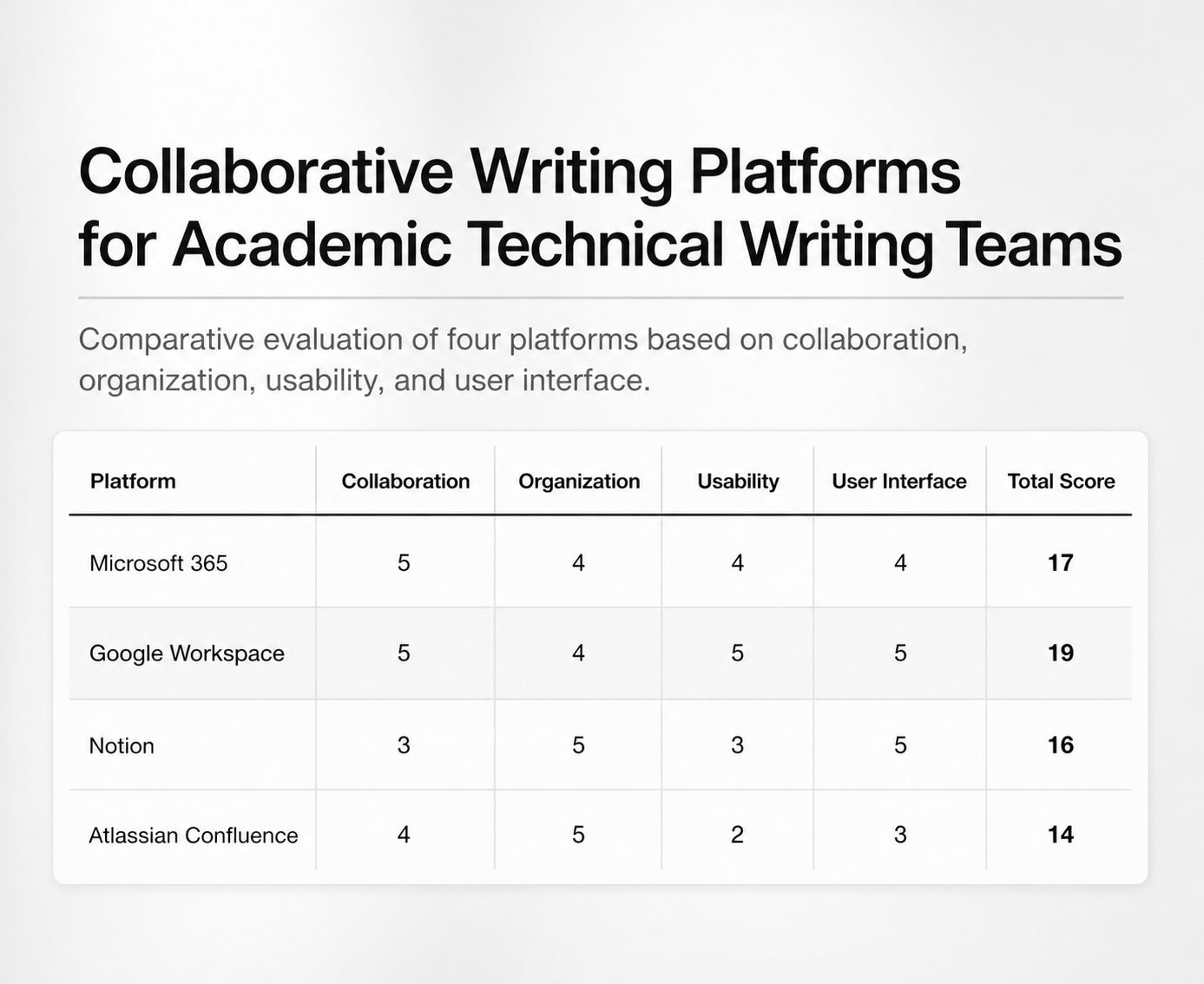
Comparative evaluation of four collaborative writing platforms, focused on how well each supports academic technical writing workflows.
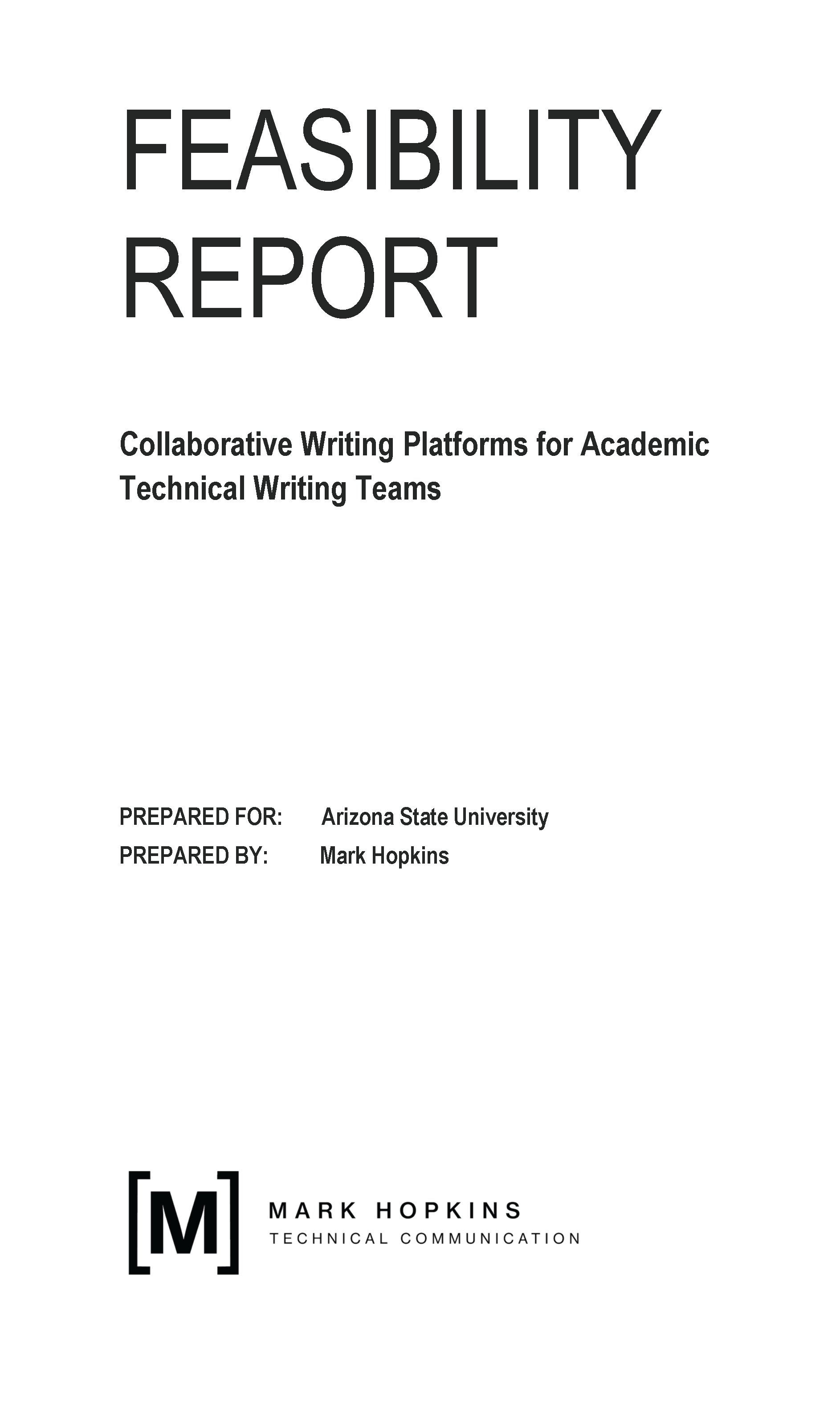
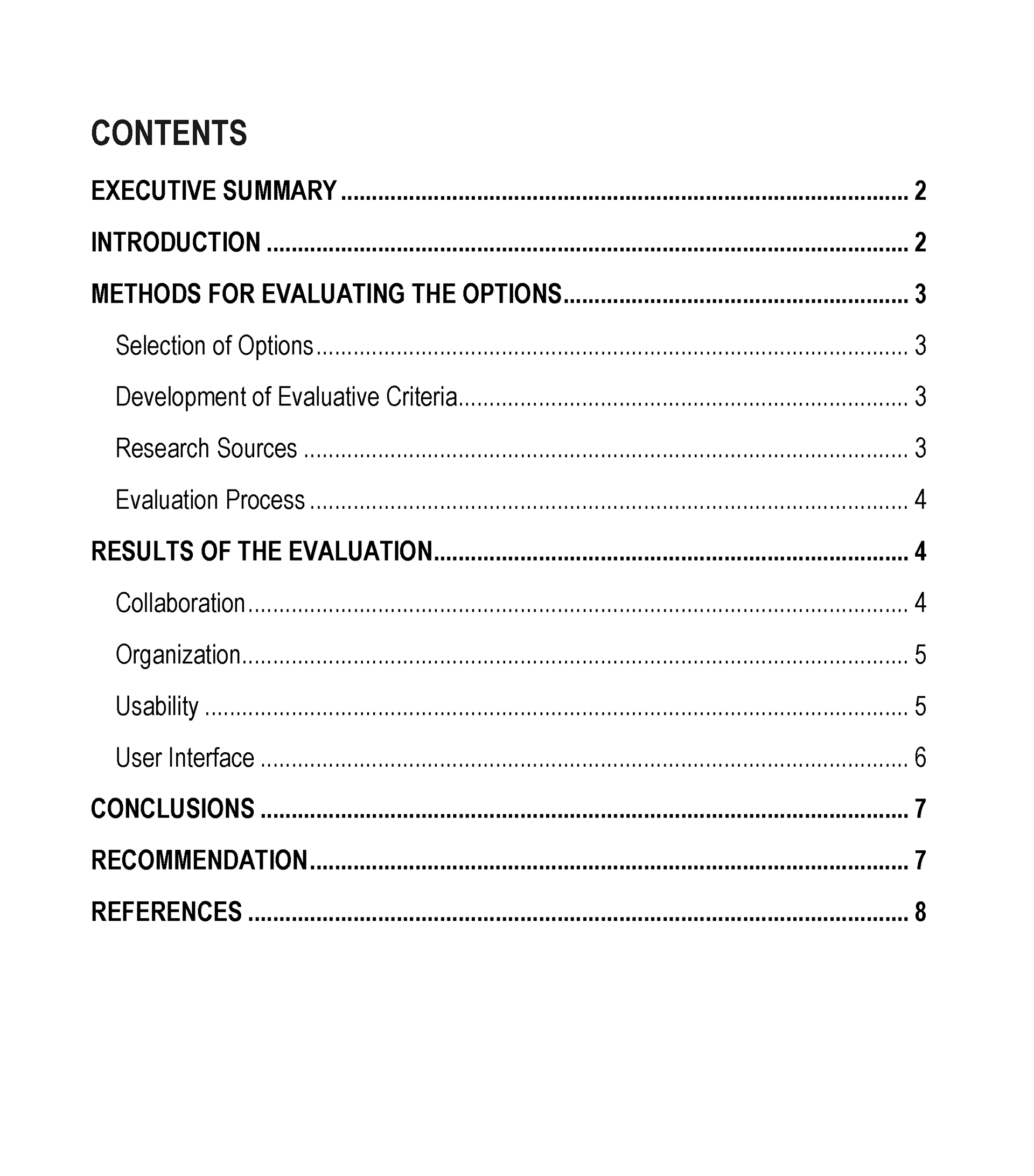
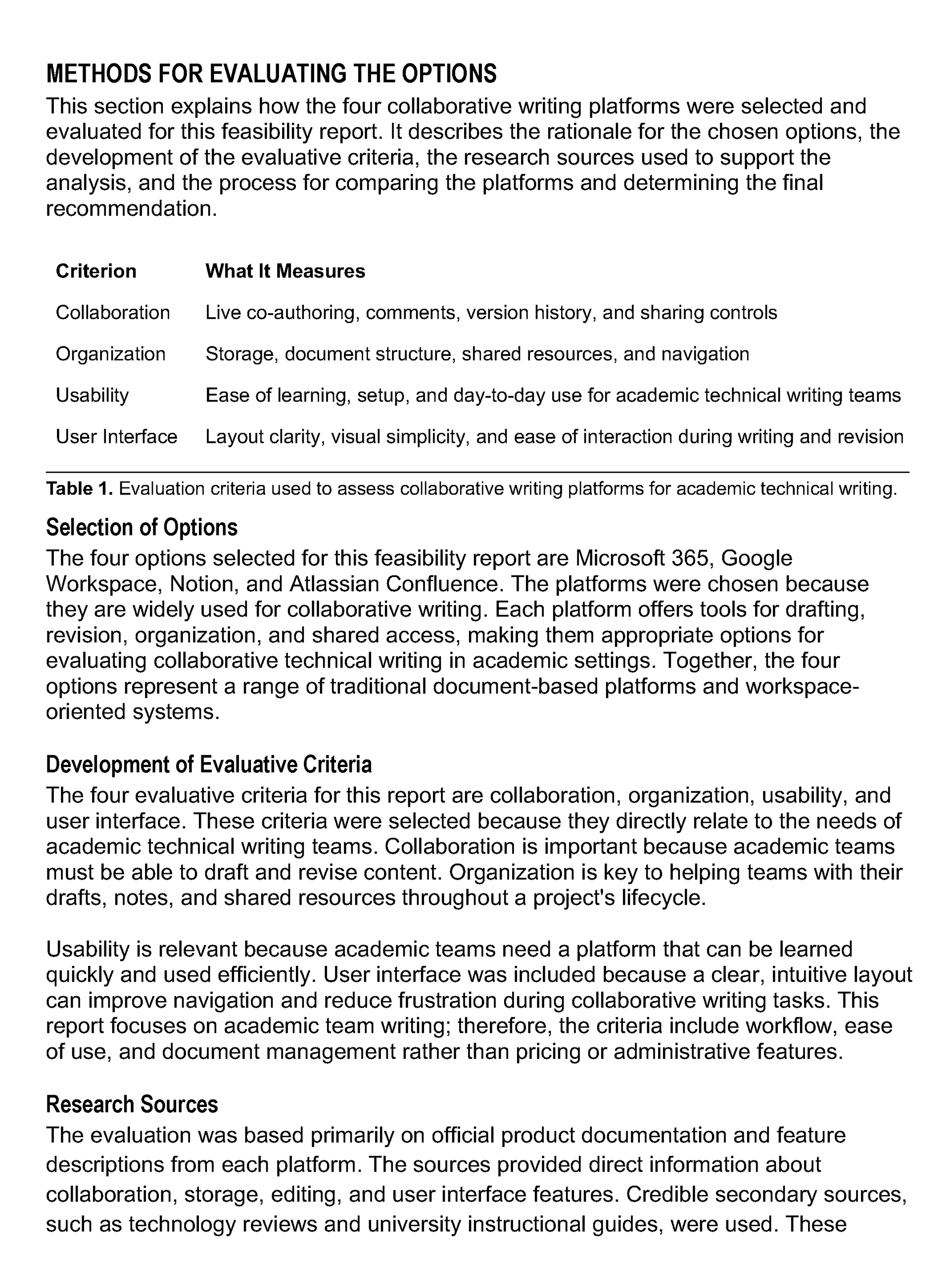
Selected pages from the Feasibility Report
Project Overview
Role
Sole author responsible for research, evaluation framework, analysis, and final report.
Problem
• Academic technical writing teams rely on collaborative platforms that vary widely in structure, usability, and workflow support.
• Available tools are often evaluated in isolation rather than compared against consistent criteria.
• Teams need a clear way to assess which platform best supports drafting, revision, organization, and collaboration.
Approach
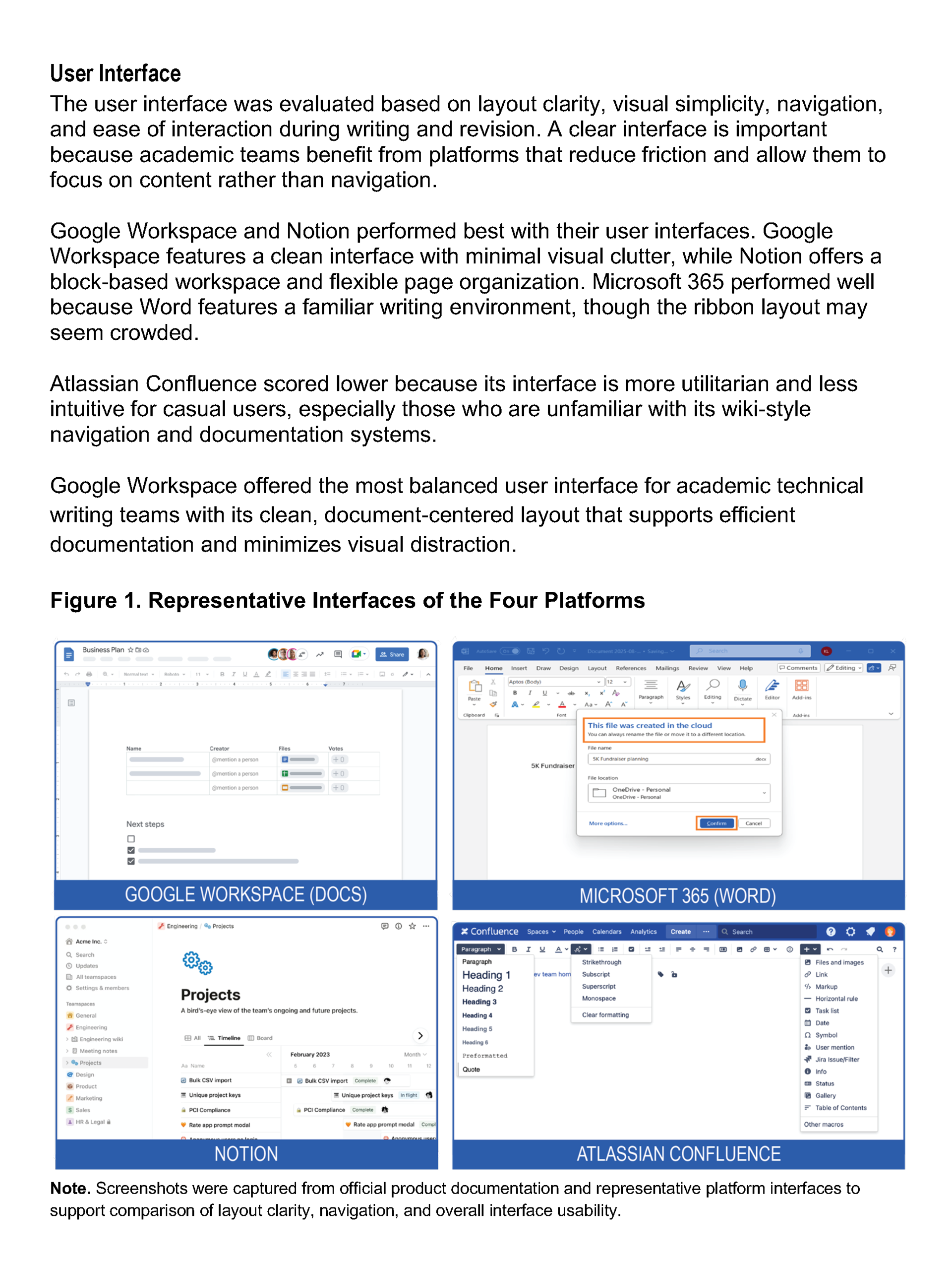
• Defined evaluation criteria: collaboration, organization, usability, and user interface.
• Researched each platform using official documentation and credible secondary sources.
• Compared platforms using both qualitative analysis and a scored decision matrix.
• Assessed how each platform supports real academic writing workflows, not just features
Outcome
• Identified Google Workspace and Microsoft 365 as the strongest overall options.
• Determined Google Workspace as the most effective platform based on usability, accessibility, and collaboration support.
• Produced a structured evaluation framework that can be reused to assess similar tools.
• Clarified tradeoffs between document-based and workspace-based platforms.
Tools Used
Microsoft 365, Google Workspace, Notion, Atlassian Confluence, Adobe Acrobat Pro